

Chronicles in Central Africa: Reflecting on Gisèle’s Semester in Yaoundé, Cameroon
Posted in Announcements News Story | Tagged Language Learning, news story, Semester Program, study abroad
Gisèle Booth-Clibborn, hailing from the United Kingdom, is a junior in the School of Foreign Service studying International Political Economy with a minor in French. As an international student, she’s passionate about global economic development and about languages as a gateway to the world, working to dismantle language barriers. When she’s not involved in DCivitas or TAMID, you can find Gisèle spending time with her friends and training for a half-marathon!
This past fall, Gisèle studied abroad in Cameroon with Université Catholique d’Afrique Centrale (Middlebury), a program situated in central Yaoundé– the capital of the country. All coursework is conducted in French and students live in a homestay, providing them ample opportunity to immerse themselves in Cameroonian culture.
Section 1: Why Cameroon?
Gisèle details why she chose to study abroad, what drew her to Université Catholique d’Afrique Centrale (Middlebury), and how it connects to her overall Georgetown academic journey.
Q: Why the Université Catholique d’Afrique Centrale (Middlebury) specifically?
A: For me, there were two options within Cameroon: either the SIT program or Middlebury program. However, as a French minor, I was always drawn to the French speaking programs, which in Cameroon meant the Middlebury program was the only one that suited my interests as the SIT students study in English. When learning more about the course program, I realised that most classes would be taken at the Middlebury Center in Yaoundé, and therefore the university wasn’t necessarily a huge part of the overall experience unless you wanted it to be by joining their clubs for example.
Q: How does this program connect to your long-term goals?
A: I wanted to push myself out of my comfort zone and thought that studying abroad somewhere completely different was a perfect way to do so, especially as I wouldn’t think I would have another moment to live in Sub-Saharan Africa once I graduate and get a job in the US or England. However, coming back from my 3 months in Cameroon has really opened my eyes to a completely different side of the world. It has definitely enhanced my passion for economic development and the factors that play into that.
Q: What made you decide to study abroad in Yaoundé for your French language studies?
A: I was originally thinking about studying abroad in France but realised that because I am lucky enough to live very close to France and visit (coming from the UK), I wanted to have a very culturally different experience to what I am used to. I liked the idea of living with a host family, particularly in a country and area of the world I have little knowledge about. When reading about the blogs people had previously posted about their experiences there, I believed that the inclusiveness of the host families and professors, alongside the huge cultural immersion was something I was looking for and wanted to experience.
Q: Before arriving, what were you most excited or nervous about? How has that changed?
A: Honestly, I had no proper expectations of what to expect, which was both nerve wracking but good because it stopped me from having preconceptions about my time there. I was nervous to meet my host family because spending 3 months with a different family is something I had never done before, and I wanted to obviously make a good impression as a result. I also was unsure about living arrangements and what Yaoundé generally looked like but this also meant I came into the program more open-minded but just knowing I would learn a lot of new things the whole time!
Section 2: Academic Focus & Learning
The Université Catholique d’Afrique Centrale Middlebury program is located in Yaoundé, Cameroon, and requires all students to take coursework in French.
Q: How did teaching styles and classroom dynamics affect your academic experience compared to experiences at Georgetown?
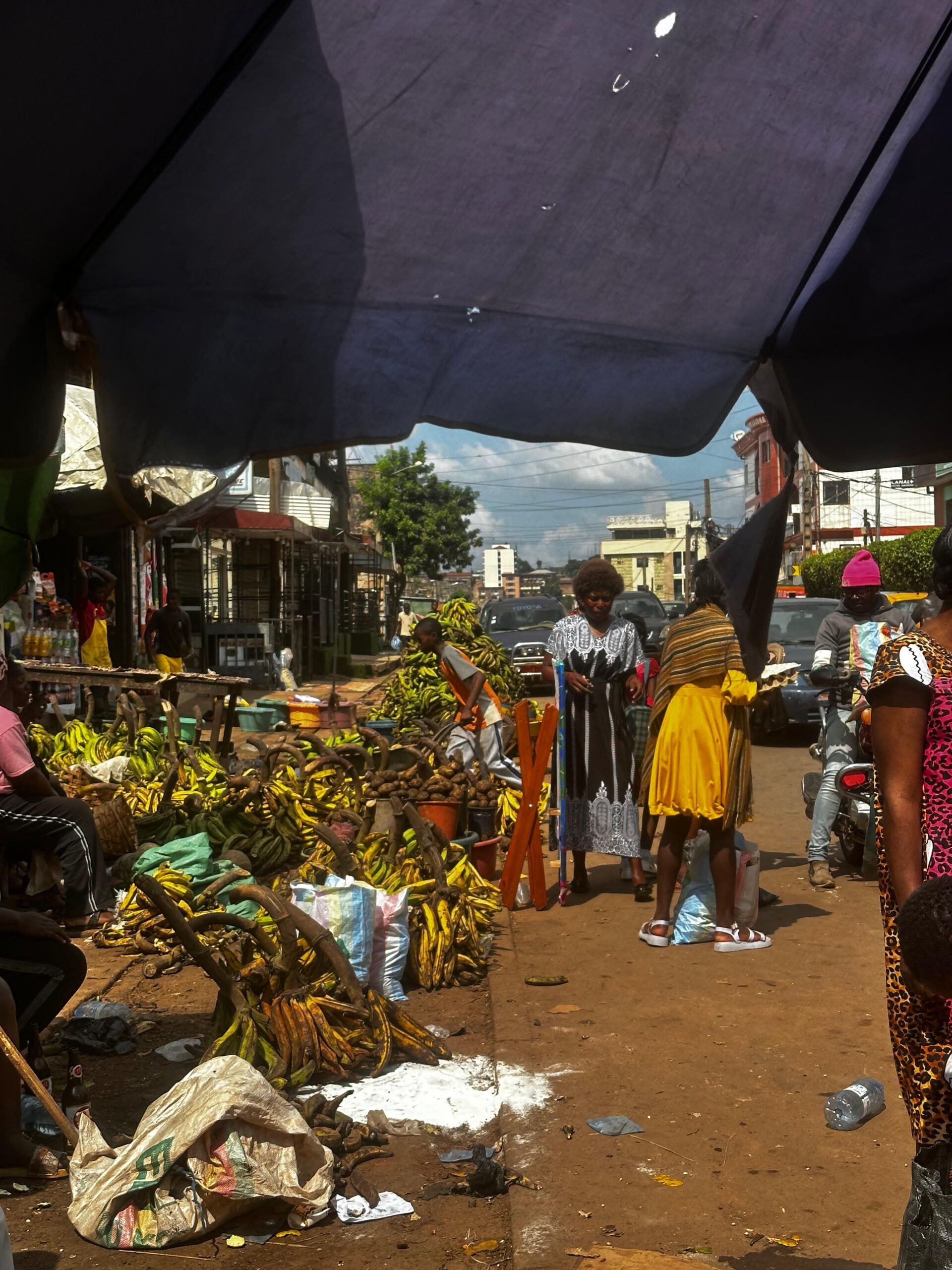
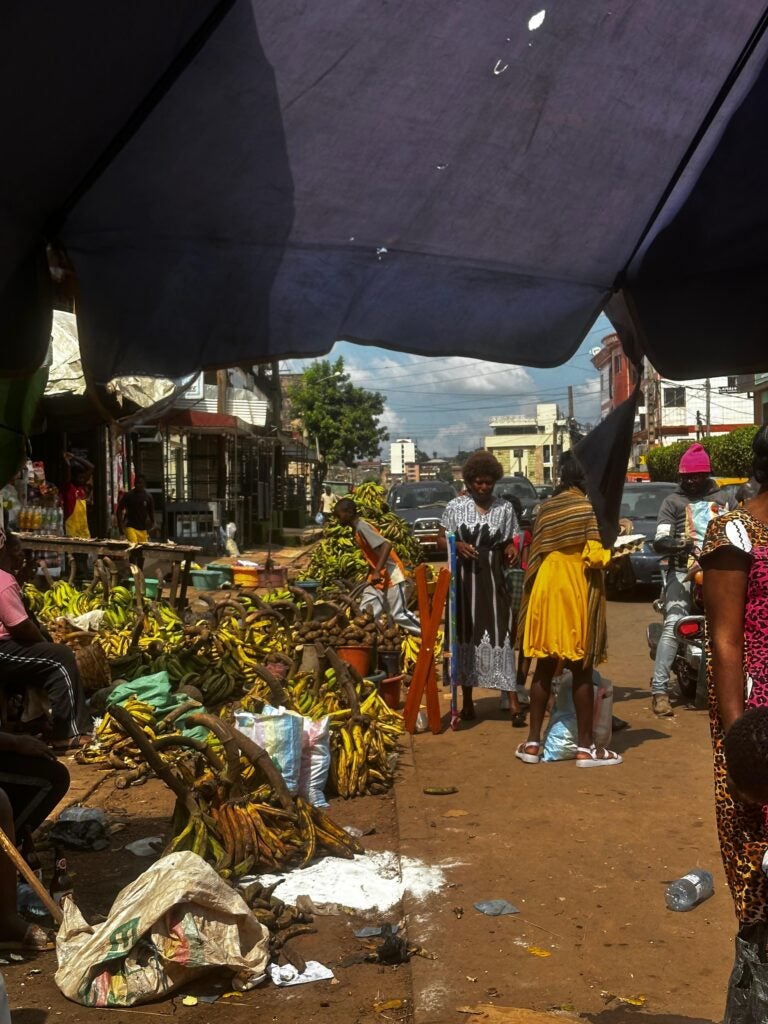
A: The teaching styles were very similar to that of Georgetown, with constant work and participation counting to the final grade. However, I didn’t feel like the level of work was as intense, as the professors wanted us to learn about immersion and cultural experiences far more so than concentrating on academia. I really enjoyed reading books (in French) written by Cameroonian authors, as well as taking a history class about the politics and history of Cameroon and learning a new local dialect which included going out to markets and learning how to bargain in the language! All the professors were extremely kind and generous with their time, as they have been teaching with this Middlebury program for more than 10 years, as well as working as professors or teachers at local Yaoundé universities/schools.
Q: Have you had opportunities to engage with local citizens? Do you feel that your proficiency in French has improved through these interactions?
A: Yes I definitely engaged with local citizens: mostly through my host family, the professors and their children, and the other host families with their children too. There are always people who you will talk to on the roads, either pestering you … or being genuinely nice and wanting to learn more about where you are from and what you are doing in Cameroon. On the whole, people are very generous with their time and really want you to immerse into their culture. I also learnt how to make jewellery with another student, from a man I met near my host family who seemed genuinely kind and passionate to teach us something new.
My French proficiency improved quite a lot because we are forced to solely speak in French both with our families and at the center, and getting around the city does require basic French too although I was surprised by how many people also spoke some English.
Section 3: Daily Life in Yaoundé
Yaoundé, the capital city of Cameroon, boasts lush, green landscapes and many hills. Known for its bilingual national identity, Yaoundé reflects Cameroon’s extensive ethnic and cultural diversity. Founded in the late 19th century, the city has grown to be a major educational hub where French predominates in Yaoundé’s government and everyday life.
Q: Tell us a bit about your daily life in Yaoundé – what’s your living situation like, and what’s a typical day for you?
A: At the beginning when classes were full on, we would wake up at 5:30AM (and we definitely got used to having to go to bed by 10:00pm…) Because we were a small group, our professor would pick us up with his kids and drop them off at school to continue driving us to the Middlebury Center where we would then start classes at 8:00am. The reason for getting up and driving so early was to beat the traffic which would be horrendous from about 7:00am to 10:00am. Then classes lasted until 4:00pm, with constant breaks and a lunch pause where we’d venture out to different restaurants within walking distance, or cook a meal at the center. Coming back home, me and the other students all got into the public taxis that take you around the city to head home. Sometimes, coming back home would take longer than normal if it was hard finding a taxi going in your direction or willing to take your price (as you bargain basically for everything…!). If I wasn’t too exhausted, I would go to a local gym that I had a gym membership at or go straight home to do some homework, chat with my host brother and eat dinner. My host father loved to watch lots of TV, particularly the news, so I’d typically end my school day watching that with him before going to bed.
Days without school consisted of me learning to cook a meal, learning to wash my clothes by hand, helping wash the dishes, going to a local bar with the other students/host siblings, or taking tennis lessons at a club I joined in Yaoundé.
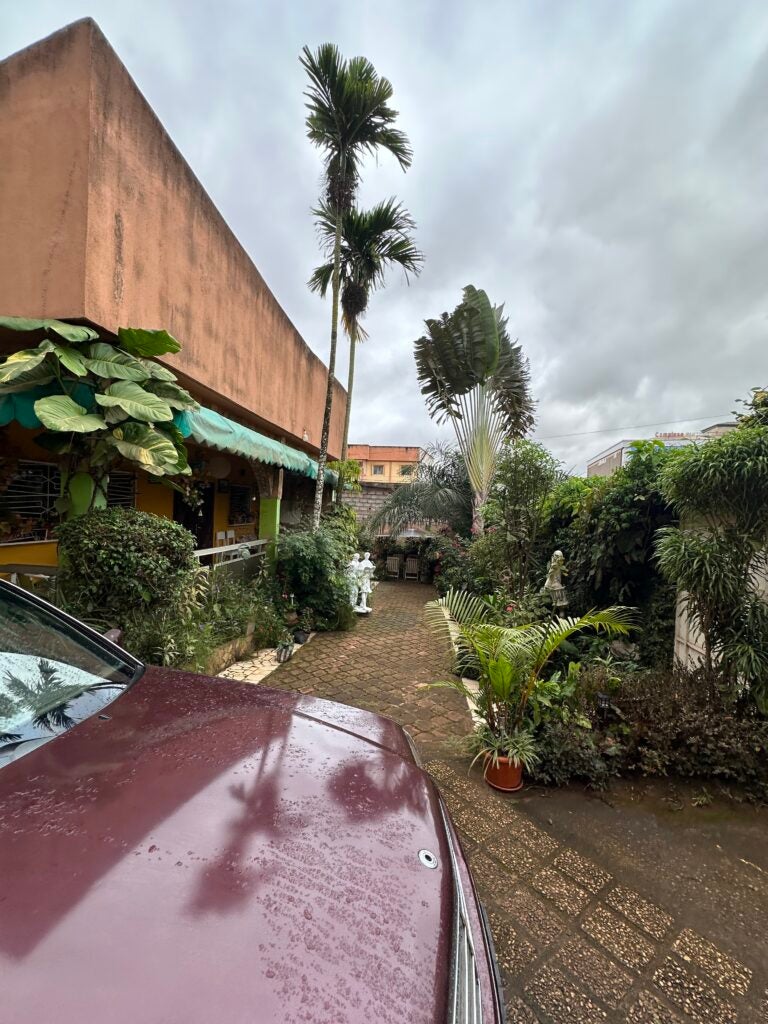
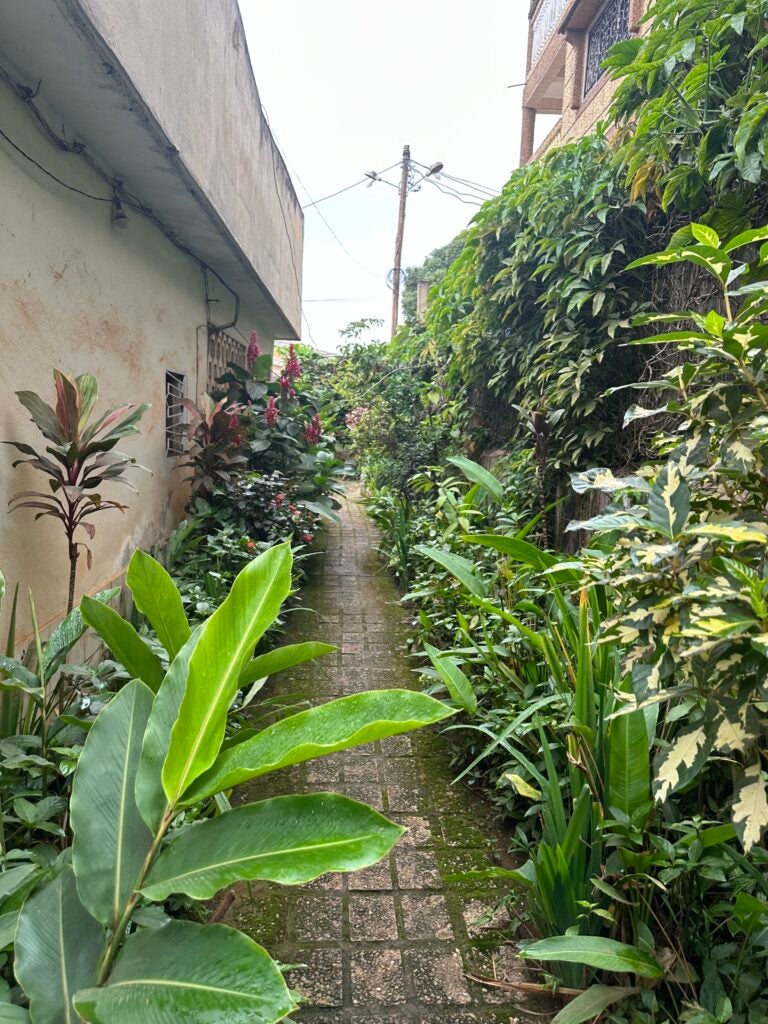
I always felt very safe in my home that had a guard dog and was a gated house (with lots of locks and keys), and my host parents made sure I was picked up from our front gate if it was dark just to be extra cautious. The garden was beautiful because my host mother loved planting and there were tables outside I could work on too.
Q: In what ways did transportation and infrastructure affect your daily living?
A: The roads are definitely not the same standard as in the US, with lots of holes and cracks (which the Cameroonians won’t stop talking about!) which means that some of my taxis did get stuck and I’d have to get out and help push it out of the hole! This also contributed to lots of traffic sometimes, but quickly understanding what times were rush hours made sure that I limited travel time during these times. Most of my transportation was through the local public taxis (their only public transportation within the city), so I would be sitting with local people often conversing with them on interesting topics too. At the start I was nervous to be alone in these taxis, but as soon as I forced myself to do so, it quickly became second nature and you understand what prices you should be saying to get from one area to another. As these taxis are public, it is very improbable that you will be dropped off at your specific destination so you always have to say the nearest roundabout, junction or a big famous building near yours.
Q: How did you navigate social norms and cultural immersion in local spaces?
A: I made sure that from week 1 that I was pushing myself to experience the city with the two other students and also with a host brother, especially at the beginning when I was going to markets or areas I didn’t know where there were crowds of people.
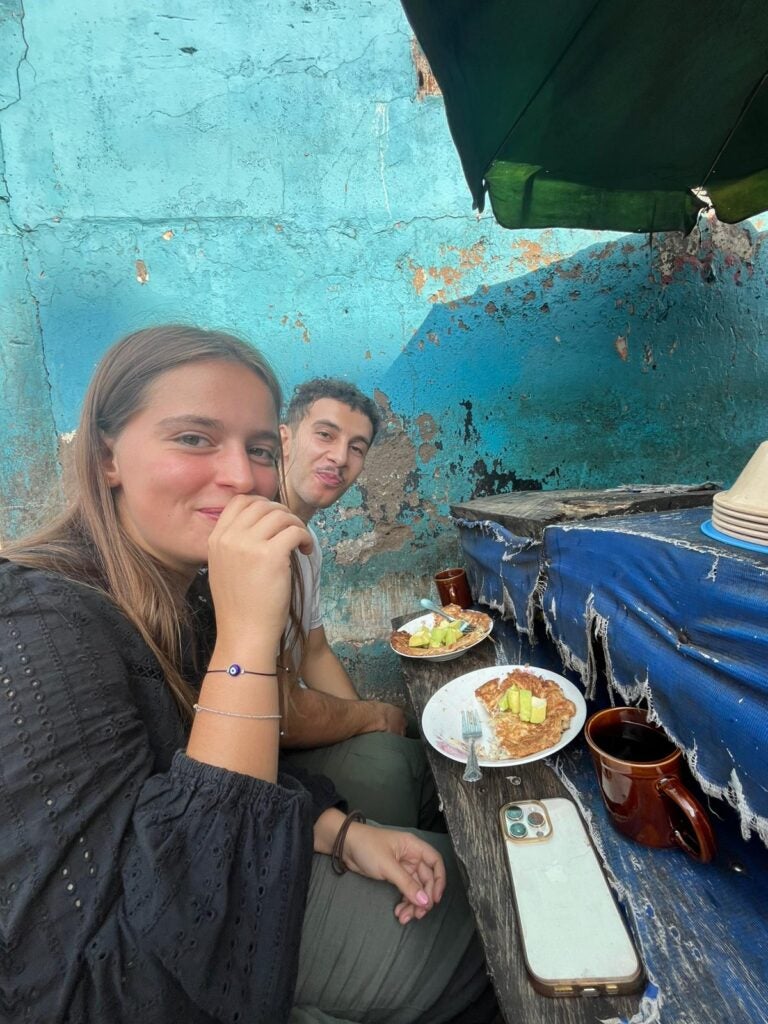
It is certainly difficult as a white girl too because you are very noticeable and people will either look at you or shout at you to grab your attention, but you learn to ignore it or converse with them quickly/laugh it away. Lots of my classes were also based on culture, practices and immersion so being able to talk about cultural shocks and differences, social norms and attitudes towards different cultures made it much easier to navigate daily life. We learnt very early on what things were deemed normal and what was impolite. It was definitely an experience that got much easier or that I got used to as I spent more time in the city.
Section 4: Reflections & Takeaways
As the Office of Global Education celebrates International Education Week, we encourage our Hoyas to reflect on how study abroad has impacted them and what lessons they have brought back to the Hilltop.
Q: What personal growth have you noticed in yourself since arriving?
A: I am much more open minded and I think I can now hopefully adapt to difficult/different situations much more than before! I think I notice small differences quite often, like how modern the technology is here [in the United States], the things people take for granted, and just the different mentalities people have. These have helped me open my perspective onto different cultures, ways of living and the importance of valuing the things one can easily take for granted, like technology and constant electricity! I’ve also learnt how to shower with cold water
Q: What does international education mean to you now that you’ve studied abroad?
A: As a student in the SFS, I take lots of classes that have an international outlook in order to foster more of a global education. But, I realised you can’t learn everything or nearly half the things through learning in a classroom. Really living an experience gives you a different perspective and understanding that you can’t reach by being taught it, which showed me the value of international education and how these experiences, the memories and the lessons learnt, will stay with you forever:
Q: How has this experience influenced how you see your role as a global citizen?
A: I’m definitely much more interested in the African continent, particularly sub-saharan Africa. Everytime I see something related to Cameroon, it immediately catches my attention! I also love talking about my experience too, in that way spreading what I learnt, what I saw and what are wrong stereotypes people may have.
Q: Has this experience influenced what you might want to do after graduation?
A: I would definitely be more open to jobs where I would have to travel to Cameroon or the African continent in general, as I believe I was able to adapt relatively quickly. My increased interest in global economic development probably has shifted my
Q: What advice would you give to other students who are considering studying abroad – especially in less-traveled, French-speaking countries?
A: It’s definitely not for everyone, particularly those who have a hard time adapting, but if you think you want to push yourself this is the best opportunity to do so. I hated travelling before (very ironic), but I have absolutely no regrets going to Cameroon because I got to really immerse myself and experience their lives and culture for 3.5 months. Being open minded and having little to no preconception or ideas of what my daily life would be like was scary beforehand, but seriously helped me with adapting to all different scenarios. The professors and my director (Christiane) were unbelievably supportive and kind and funny! This was the same for my host family and my host brother who took us all on a hike and out to a bar with his friends.
Additional Questions
To conclude our interview with Gisèle, we asked rapid-fire questions, ranging from things we wish we packed before going abroad and Cameroonian customs we hope to bring back from abroad!
Q: What’s one thing you packed that you’re glad you brought – or wish you had?
A: A portable charger for when the electricity cuts out. You never know when it will turn on again (or when it turns off!), even if the outage lasted usually just 1 or 2 hours.
Q: What about Cameroon has surprised you?
A: How passionate all Cameroonians are about their culture and traditions, and how they want to share this as much as possible with you. Even through learning about their unsteady political situation (a President who has been in power basically since becoming independant) which has angered the majority of the population who continuously speak of their suffering as a result, they are still so proud to be Cameroonian.
Q: What’s a local phrase you’ve picked up and what does it mean?
A: Yo ça dit quoi? – It’s a way that the younger generation greet each other to say “What’s up?”
Q: What’s a Cameroonian custom or habit you wish people in the U.S. would adapt? Or better framed, what about the Cameroonian lifestyle is different from the U.S. and will you still be implementing it upon your return?
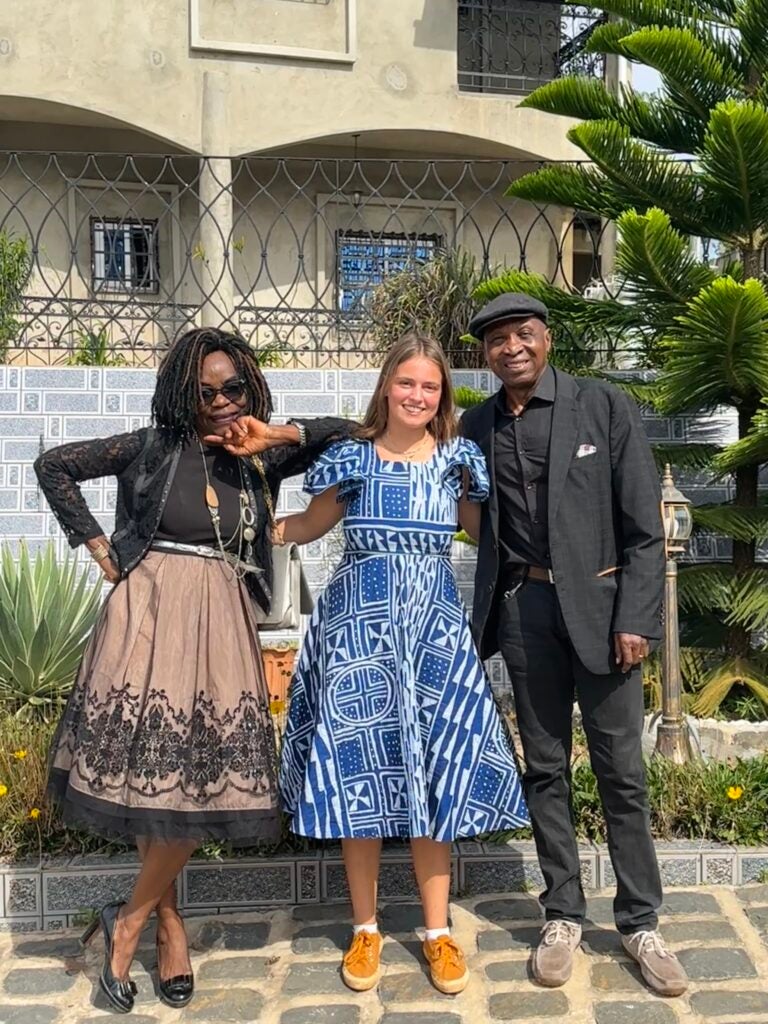
A: The importance of local tradition and practices because they still do some things that their ancestors did thousands of years ago. They value their culture a huge amount which I think is something the US is losing rapidly, especially with the rise of technology and globalization. In this, everyone dresses really nicely and differently with no fashion contest! The women usually wear skirts and dresses that are super bright and have really cool patterns.
Q: What souvenir did you bring back?
A: Lots of local dresses! I’m not sure when I will be able to wear them but I thought they were a great souvenir.
At the Office of Global Education, we are committed to providing a range of undergraduate study abroad programs that can work for any school and any major. Université Catholique d’Afrique Centrale (Middlebury) enables students to immerse themselves in Cameroonian culture while completing coursework in French. If you’re interested in learning more about Université Catholique d’Afrique Centrale (Middlebury), book a meeting with our Africa advisor, Dr. Jason Sanderson, on our website. With the Spring 2027 study abroad applications opening late April/early May, we invite students to attend a mandatory Study Abroad 101 session to learn more about their options and begin the study abroad process. These meetings are offered several times per week, and are led by our team of Peer Advisors who have studied abroad in previous semesters.