

Lessons from Budapest: My Time at Corvinus University
Posted in Announcements | Tagged announcements, news, news story, Semester Program, study abroad
Maggie Dugery (CAS ‘27) is a junior at Georgetown University’s College of Arts and Sciences from Haverford, Pennsylvania. She is studying mathematics with a minor in economics, but aside from classes, she plays on the women’s club squash team, is a member of Georgetown’s coed community service fraternity, Alpha Phi Omega, and is a math peer tutor.
In the Fall 2025 semester, Maggie studied abroad at Corvinus University of Budapest through AIFS.
Section 1: Why Hungary
Maggie explains why she decided to study abroad, what drew her to Budapest, and how it all ties into her overall academic experience at Georgetown.
What made you decide to study abroad?
I actually transferred to Georgetown my sophomore year from a small liberal arts college in North Carolina. At my old school, around 70-80% of the junior class studied abroad in the fall semester, so I had always assumed that I would do the same. I didn’t want to be left on campus while all of my friends were away. At the same time, I wasn’t entirely sure why I wanted to study abroad and was honestly really scared of being homesick on a different continent.
When I got to Georgetown, I was surprised by how many students don’t study abroad. That made me feel like I had more of a choice, so I took time to reflect on whether it was something that I genuinely wanted. As people I knew came back from their semesters abroad and shared stories about travel and new friendships, I realized that I would be passing up an opportunity of a lifetime: four months in another country, supported by Georgetown, with classes as my main responsibility and a built-in community of American students sharing the experience.

Why AIFS Budapest specifically?
I spent hours on the OGE website last fall browsing program options. While there are limited programs that offer math classes in English, I found many that offered economics courses that could fulfill my minor requirements.
Originally, I planned to go to Prague because I had heard great things from past program participants. I had completed a good chunk of my application when I got an email announcing a new program in Budapest. I was immediately intrigued because my oldest brother had studied abroad in Budapest at the same university four years before and had loved his time there.
After going back and forth, I chose Budapest. I was more interested in the economics courses at Corvinus, and I really valued having someone I could ask questions before leaving. I was also excited by the idea of experiencing a culture that felt very different from the United States, which seemed like it would be both challenging and rewarding.
Before arriving, what were you most excited or nervous about?
My biggest fear was that I would arrive and immediately feel homesick, but that feeling was outweighed by excitement about all of the new experiences ahead.
On our first day, my program cohort of eight people met for a walking tour of our neighborhood and a lesson on public transportation. The next day, we met about forty other American students studying at our university through different programs. Meeting such welcoming people and realizing that we were all going through the same adjustment helped us bond quickly and eased any feelings of homesickness right away.
Section 2: Academic Focus and Learning
Corvinus University, nestled in the center of Budapest along the Danube River, is one of the top business schools in Europe. A premier institution within Hungary, Corvinus provides excellent programs in Business, Economics, and Social Sciences.
What classes did you take in Budapest?
For my economics minor, I took Behavioral Economics and Econometrics. Both classes included a final project that was manageable but also gave me insight into potential career paths in economics.
I took Beginner Hungarian, which initially seemed daunting but turned out to be both incredibly fun and useful for daily life.
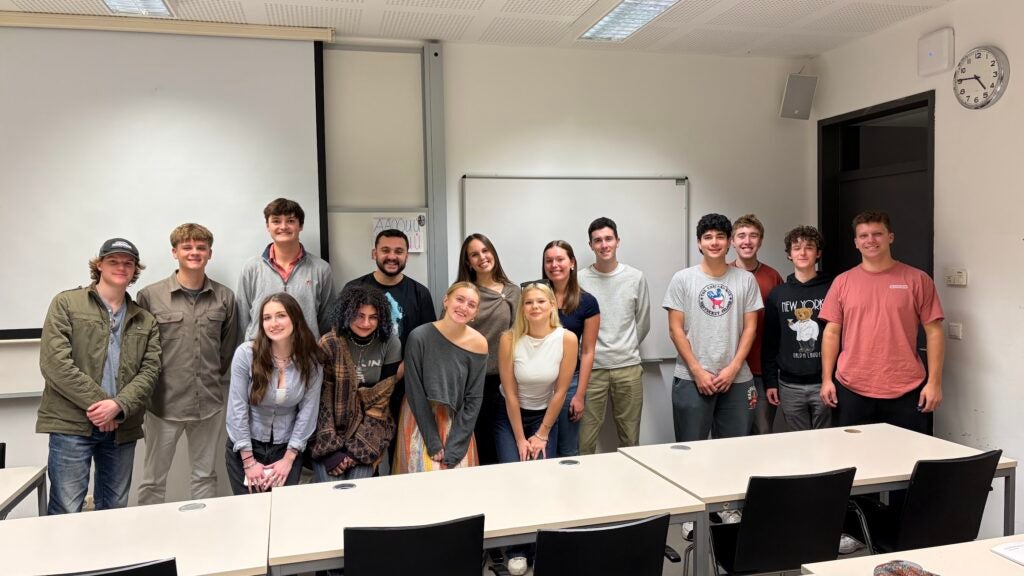
For my remaining courses, I wanted to take advantage of being in Budapest by choosing classes that differed from my typical Georgetown courseload. I took Budapest Exploration of the Urban Space, where each week we visited a different, lesser-known part of the city and learned through experience about Budapest’s history. My final course, Communism of East-Central Europe, focused on communist regimes and transitions to democracy in Poland, East Germany, Czechoslovakia, Romania, Yugoslavia, and Hungary. My professor had lived through communism in Hungary, which added a powerful personal dimension to the course. This was probably my favorite class, and I feel like I learned so much by focusing deeply on one region for the entire semester.
Were you able to travel outside of Budapest, and how did that shape your overall experience abroad?
My university had a ten-day fall break in late October for the commemoration of the Hungarian Revolution. I took advantage of this time to travel so that I could spend more weekends in Budapest. One major advantage of studying with AIFS is that they offer a free Eurail pass to students who commit by a certain date.
During fall break, I traveled by train to Florence, Lucerne, Amsterdam, and Brussels before flying home to Budapest. While I spent thirty hours on trains over those ten days, traveling this way allowed me to see the countryside and, of course, pack with fewer restrictions! I also used my Eurail pass for trips to Salzburg, Vienna, and Prague. Visiting Prague was especially meaningful because I could connect what I saw in statues and monuments to what I had learned in my Communism class.
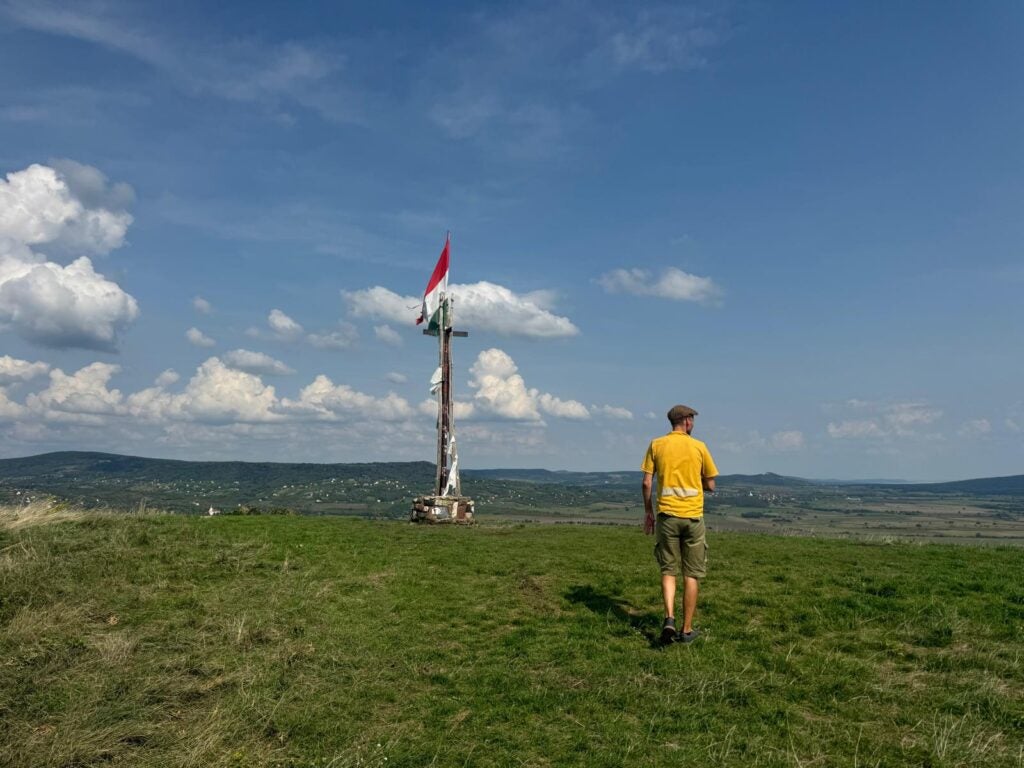
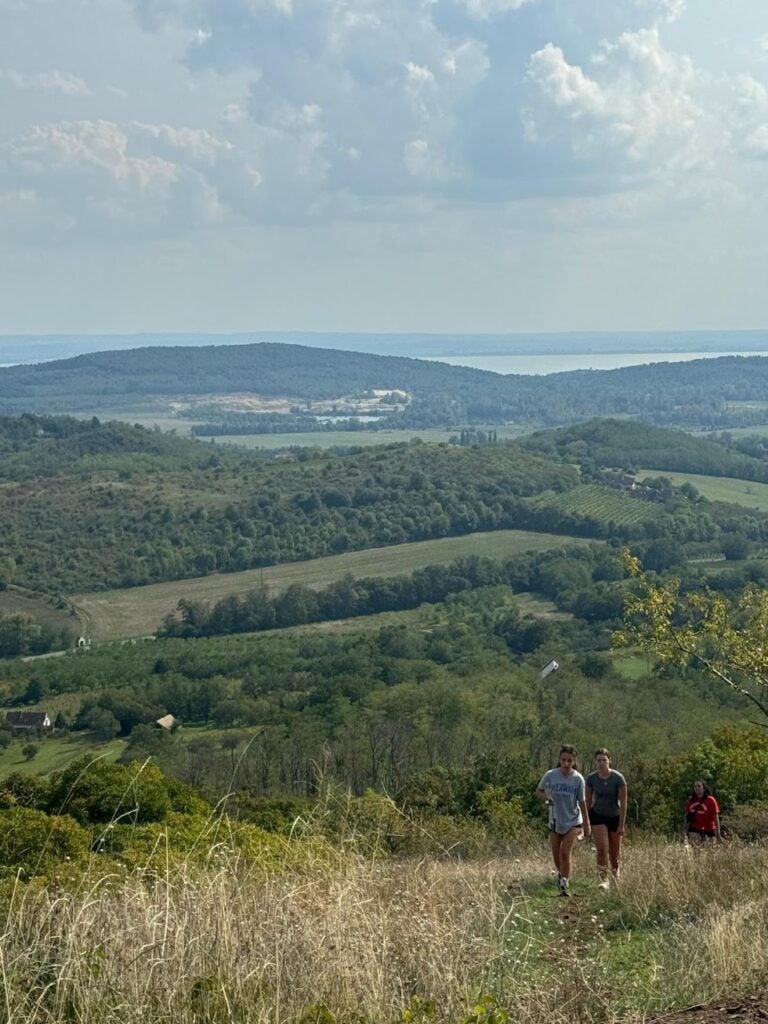
AIFS also organized a weekend trip to Lake Balaton before classes began. We spent three days hiking, biking, swimming, and wine tasting with a local guide who helped us discover and have access to places we wouldn’t have on our own, including a natural see-saw made out of rock and an authentic Hungarian restaurant.
While most of my trips outside were short, they exposed me to a wide range of cultures and left me with a long list of places that I need to revisit!
Section 3: Daily Life
What’s your living situation like?
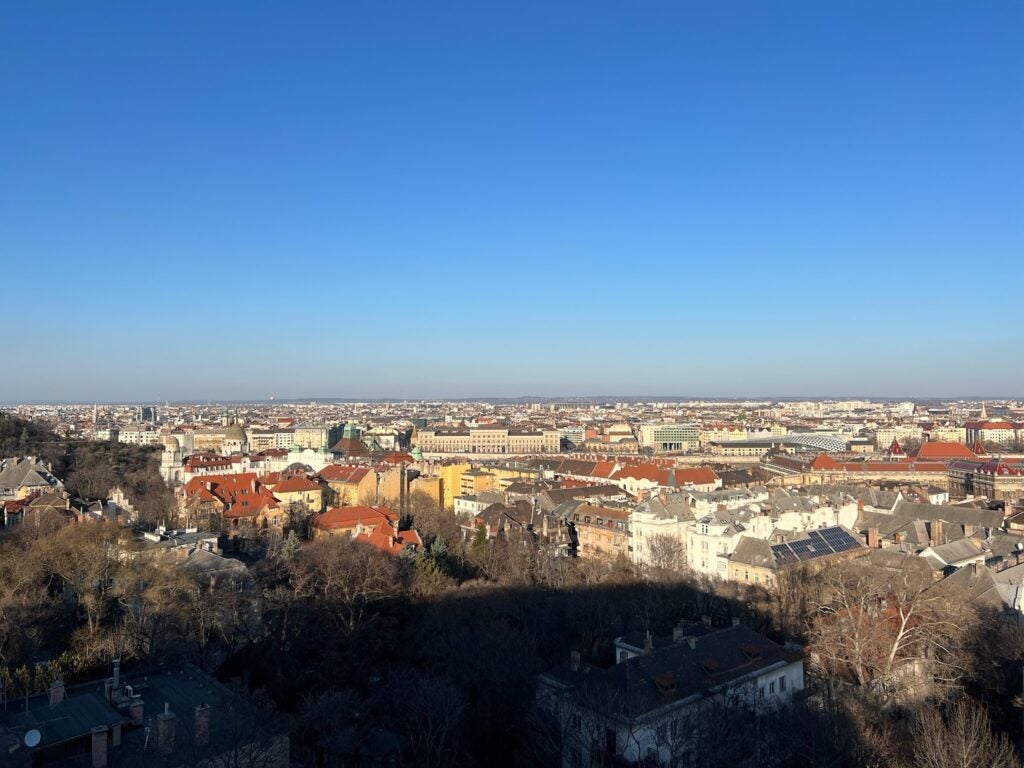
We lived in university housing on the Buda side of the city in the Gellért neighborhood. The main street near our dorm was lively and full of cafes and restaurants.
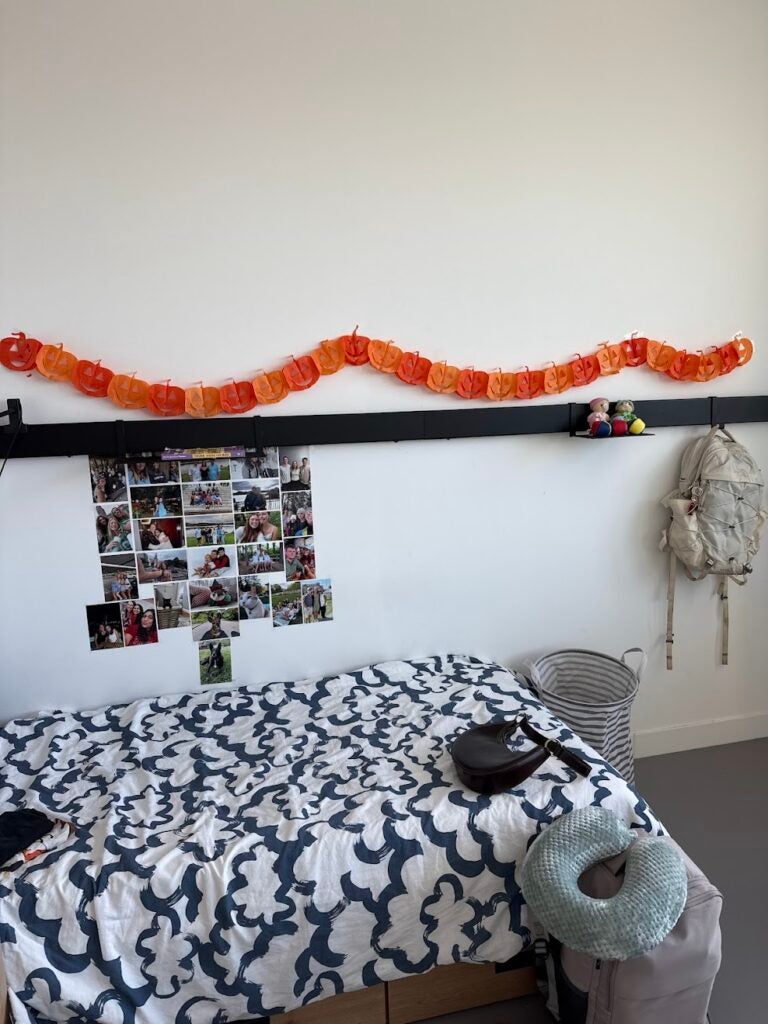
The rooms were spacious doubles with large windows, a bathroom, plenty of storage space, and a mini fridge. Each floor had a shared kitchen. I initially thought that no one would use it, but since it came stocked with pots, plates, and silverware, it became a social hub where my floormates from all different countries would chat while cooking.
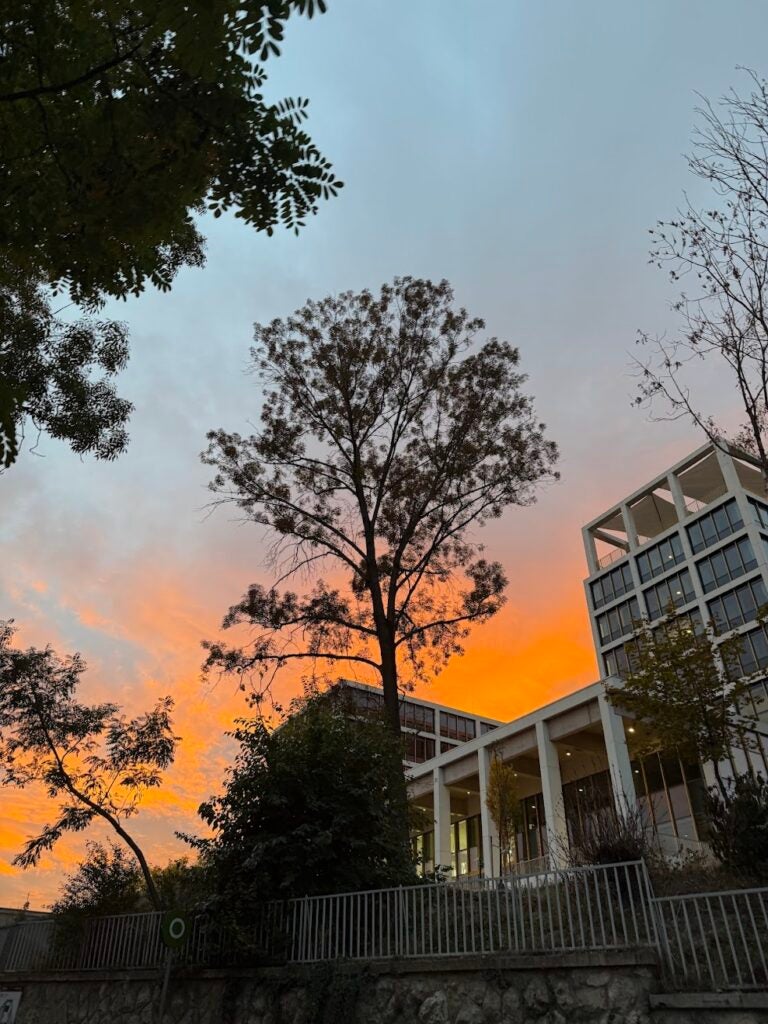
Corvinus doesn’t have a traditional campus like Georgetown; it’s more of a cluster of academic buildings on the Pest side, while my dorm was on the Buda side. However, there was a tram stop right outside of the dorm that ran almost every five minutes, and it was only two stops to the academic buildings! The building also had a rooftop with an incredible view of the city.
What’s a typical day for you?
I only had classes Monday through Wednesday, but these days were packed. Most of my classes met once a week for three hours with a thirty-minute break in the middle.
I usually woke up around 8, ate breakfast in the dorm, and took the tram to my classes. My morning class ran from 9:50-1:10. Afterward, I’d grab lunch with friends at one of the many fast-casual places at Kalvin Tér before heading to my next class or traveling to a site for my exploration course. Afternoon classes were from 1:40-5:00. If the weather was nice, I’d walk back to the dorm across Liberty Bridge! Evenings were relaxing; I’d finish any homework, which was manageable since most classes focused on exams and presentations rather than daily assignments, then either cook in the shared kitchen with my roommate or grab dinner nearby. If I didn’t have an early class the next day, I’d meet up with friends at another dorm or host them at mine.
What’s something you’ve experienced in Hungary that you will never forget – big or small?
On our first night in Budapest, my program group went out to dinner near our dorm. On our last night in Budapest, my friends and I walked past the same restaurant. We immediately started reminiscing about that first evening, the awkward small talk as we all got to know each other and how unsure we felt being in a new city.
It was hard to believe how much had changed. It felt like years had passed, yet at the same time, we all wished we had just a little more time together in Budapest.
What’s your favorite Hungarian food, spot in Budapest, or cultural experience so far?
Hungarian dishes are hearty and often quite rich. My favorite dish was langós, a Hungarian street food made of fried dough topped with sour cream, cheese, and garlic. It sounded unusual at first, but it quickly became a favorite treat.
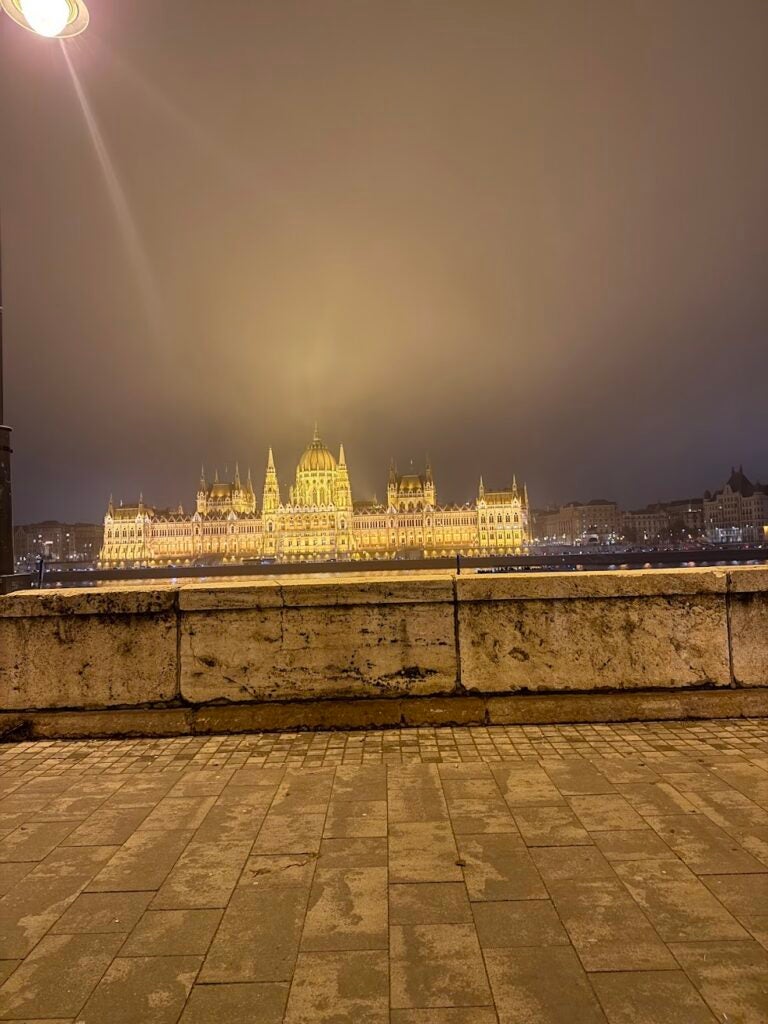
My favorite spots in Budapest were the top of Gellért Hill and a simple bench outside of the Batthyany Tér metro stop. Despite how different they are, both offer stunning views of the city. From Gellért Hill, you can see nearly everything since buildings aren’t allowed to be taller than Parliament. The bench sits directly across the river from Parliament which gets lit up beautifully every night. Even in the winter, my friends and I would go to the bench and talk for hours while looking at the view.
I also loved Margitsziget, or Margaret Island, a large park in the middle of the Danube that was accessible by public transportation!
Section 4: Reflections and Takeaways
What personal growth have you noticed in yourself since arriving?
I feel much more confident in my ability to be independent. From the moment I arrived, I was navigating a new city, making new friends, and planning travel logistics on my own.
I also developed a more positive outlook on people. I tend to be shy and assume others aren’t interested in talking, but my experience in Hungary challenged that assumption. Everyone was friendly and curious. It revitalized my own curiosity and I learned to love hearing where everyone is from and learn their backstory!
Has this experience influenced what you might want to do after graduation?
Definitely. Living abroad made me realize how much of the world I still want to explore. After graduation, I’m interested in teaching English abroad for a year or two. While I’m unsure of where, I’m incredibly excited for that chapter of my life.
Additional Questions
What’s a Hungarian custom or habit you wish people in the U.S. would adopt? What about Hungarian lifestyle is different from the U.S and will you still be implementing it upon your return?
Overall, Budapest felt so vibrant. I think this comes from a combination of factors, public transportation being one of them. No matter the time of day it was or day of the week, cafés were always full. People of all ages would sit and drink coffee or tea while talking with friends. In the US, I definitely fall into the habit of getting drinks to go and rushing off to class or a meeting. In Budapest, I came to really appreciate a slower and more social pace of life.
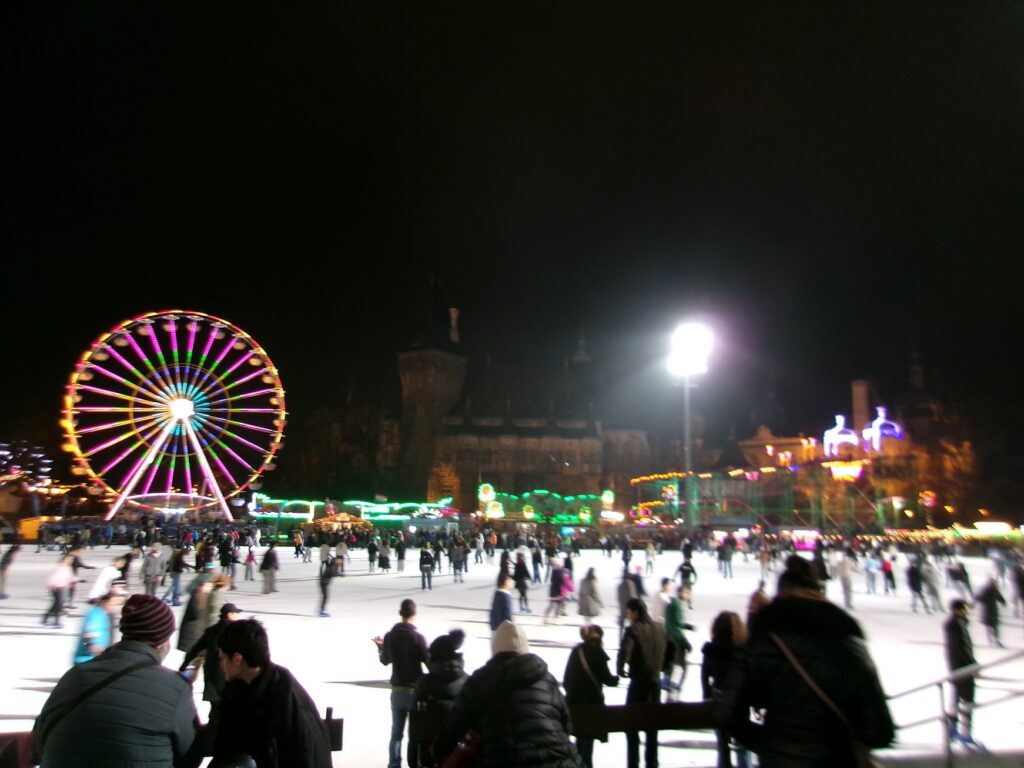
I also felt like people were always out and about, not just in cafés. Even in the winter, when it was cold, windy, and dark by 4:30pm, the city was still full of life. People continued their daily activities without letting the weather stop them. That energy made a big impression on me, and it’s something I hope to carry with me.
What souvenir would you definitely bring back?
At the beginning of my semester, I decided to collect a keychain and a postcard from every place I visited. While I was abroad, I clipped the keychains onto my backpack. Towards the end, it had become a bit excessive (everyone could hear the jingle of my backpack when I walked by).
I loved going into souvenir shops and markets in each city to find something that captured the essence of the city and ideally included the country’s flag. I approached postcards the same way, although I often couldn’t choose just one and ended up buying several, some to keep and others to mail home to family and friends.
When I got home, I picked my favorite postcard from each place and framed them individually to create a collage in my bedroom. Between the keychains and the postcards, my room now looks a bit like a shrine to study abroad, but I wouldn’t have it any other way. It’s a daily reminder of such a meaningful four months of my life.
Maggie describes her time abroad in Budapest, and we at the Office of Global Education hope that you consider Budapest for your future study abroad destination. Corvinus University of Budapest (AIFS) allows study abroad participants to enroll directly alongside local and international students.
Some of their academic offerings include, but are not limited to:
- Accounting
- Art
- Political Science
- Marketing
- Management
- International Business

At the Office of Global Education, we are committed to providing a range of undergraduate study abroad programs that can work for any school and any major. With Spring 2027 study abroad applications currently open, we invite students to attend a mandatory Study Abroad 101 session to learn more about their options and begin the study abroad process. These meetings are offered several times per week, and are led by our team of Peer Advisors who have studied abroad in previous semesters. If you’re interested in learning more about studying in Budapest, Hungary, attend a Study Abroad 101 and then book a meeting with the appropriate advisor on our website.