

Lessons from the Global South: Almitra’s Semester in Durban, South Africa
Posted in Announcements News Story | Tagged Durban, news story, Semester Program, SIT, South Africa, study abroad
Almitra Guart (SFS ’27), a junior at Georgetown University’s Walsh School of Foreign Service, hails from the quiet beauty of the Catskill Mountains in New York. She studies International Culture and Politics with a passion for environmental and land justice, exploring how development dialogues can be transformed to reintegrate marginalized voices. When she’s not immersed in research or advocacy, she can be found pursuing her dance minor—celebrating the rhythm and movement that connect people across cultures and landscapes.
Almitra recently studied abroad on SIT South Africa: International Relations In the Global South, a program dedicated to learning about South African politics, international affairs in the Global South, and non-western perspectives to international relations.
Section 1: Why South Africa?
Almitra details why she chose to study abroad, what drew her to this program, and how it connects to her overall Georgetown academic journey.
Q: Why the Global South program specifically?
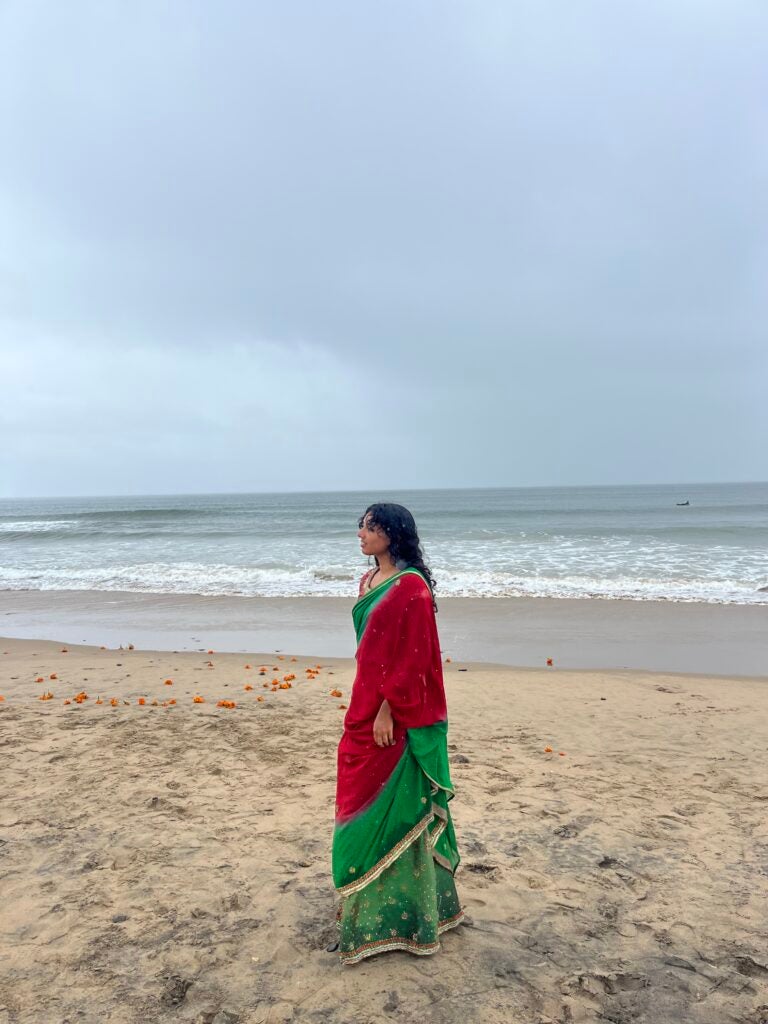
Much of the literature that shapes our understanding of the world is filtered through the lens of the Global North. To truly expand your worldview, it isn’t enough to read about the Global South from afar– you must walk its landscapes, listen to its oral traditions, and encounter its cultural heritage in all its living form. I chose this program because I wanted to learn from a place whose richness is vast yet whose perspectives remain chronically underrepresented in the formal education I receive in the United States.
Q: How does this program connect to your major or long-term goals?
I am studying land justice for my undergraduate thesis in CULP, so conducting an ISP thesis on the topic here has been incredibly insightful. I’m also applying to law school in April, as it has long been my dream to become an environmental lawyer. Being here has only deepened that aspiration. Engaging with the realities of land struggles– from extractive industries to debt diplomacy to forced removals, has given me a clearer, more urgent sense of what environmental advocacy can look like in a place confronting such immense and complex challenges.
Q: What made you decide to study abroad?
Before entering the professional world, I knew I needed lived experience: real engagement with the communities that policies and legal decisions ultimately affect. I refuse to become a detached, hypocritical policymaker or lawyer so studying abroad was a deliberate choice to ground myself in that kind of proximity.
Q: Before arriving, what were you most excited or nervous about? How has that changed?
Given the current dynamics with U.S.–South Africa relations and the way information about South Africa is being presented in American media, I arrived with some uncertainty about what to expect. Since being here, I’ve learned that, for example, there is no such thing as a white genocide. Experiencing the country directly has shown me how urgently we need to think critically about the role of misinformation and political framing in shaping public perception.
Section 2: Academic Focus & Learning
The School for International Training (SIT) is known for their immersive, field-based study abroad programs, where students often engage in an Independent Study Project (ISP) as a part of the curriculum.
Q: What kinds of academic projects, fieldwork, or site visits have stood out to you so far?
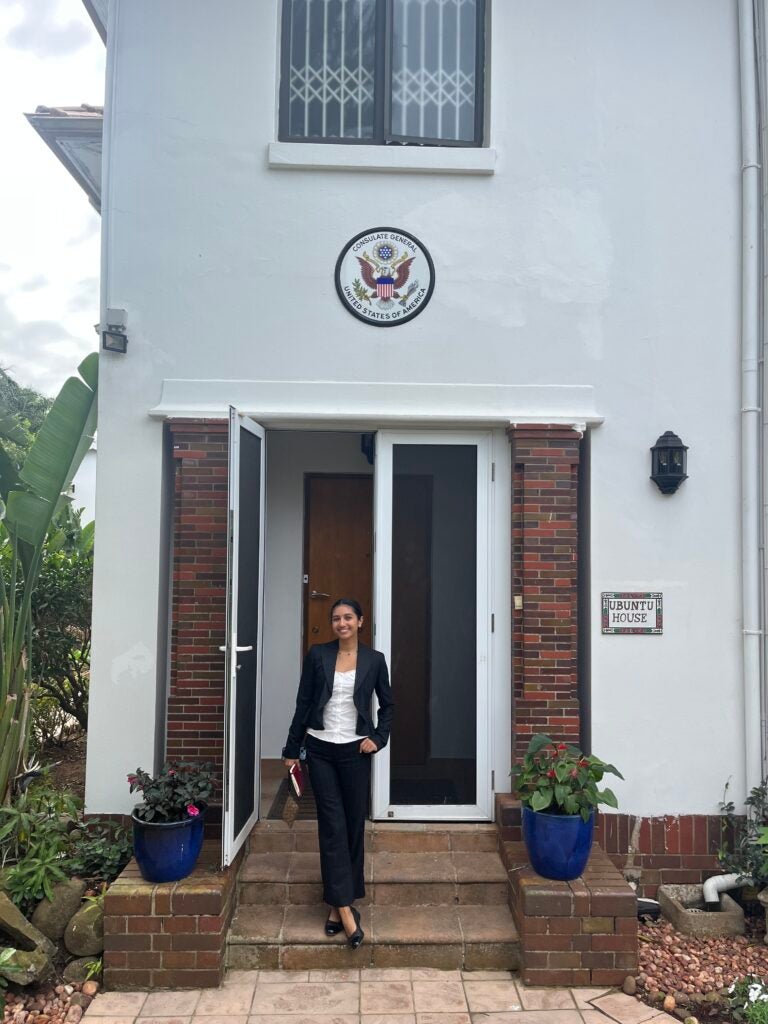
Academically, I have most loved our work with programs like ACCORD and the US consulate in Durban. Personally, I was most in awe of the game drive we did. I have never been so close to an elephant before!
Q: Is there a particular class discussion, lecture, or research topic that’s challenged the way you think?
Honestly, China-Africa relations have been immensely interesting to me. All about how the continent can leverage their natural resource power to gain investment from China, but also how this can mean dark undercurrents for African countries as well.
Q: Have you had opportunities to engage with local organizations, communities, or activists? What have you learned from these experiences?
Yes, I have engaged closely with local organizations and communities through my role as a research fellow at the 1860 Heritage Centre in Durban. My work there is directly tied to my ISP project, which examines the impact of land dispossession on the Indian indentured diaspora of Natal. Through archival research and life-history interviews, I have learned how historical injustices—such as coerced displacement, apartheid-era removals, and ongoing inequities—have shaped the community’s well-being and social mobility. Engaging with local scholars, descendants, and activists has given me a deeper understanding of how land access is tied to power, identity, and social opportunity, and has highlighted the importance of amplifying voices that are often overlooked in discussions of South African history and land justice.
Section 3: Daily Life in Durban
Durban, the third most populous city in South Africa, is situated along the coast of eastern South Africa. With a bustling metropolis and an abundance of beaches, this city offers something for everyone to enjoy!
Q: Tell us a bit about your daily life in Durban – what’s your living situation like, and what’s a typical day for you?
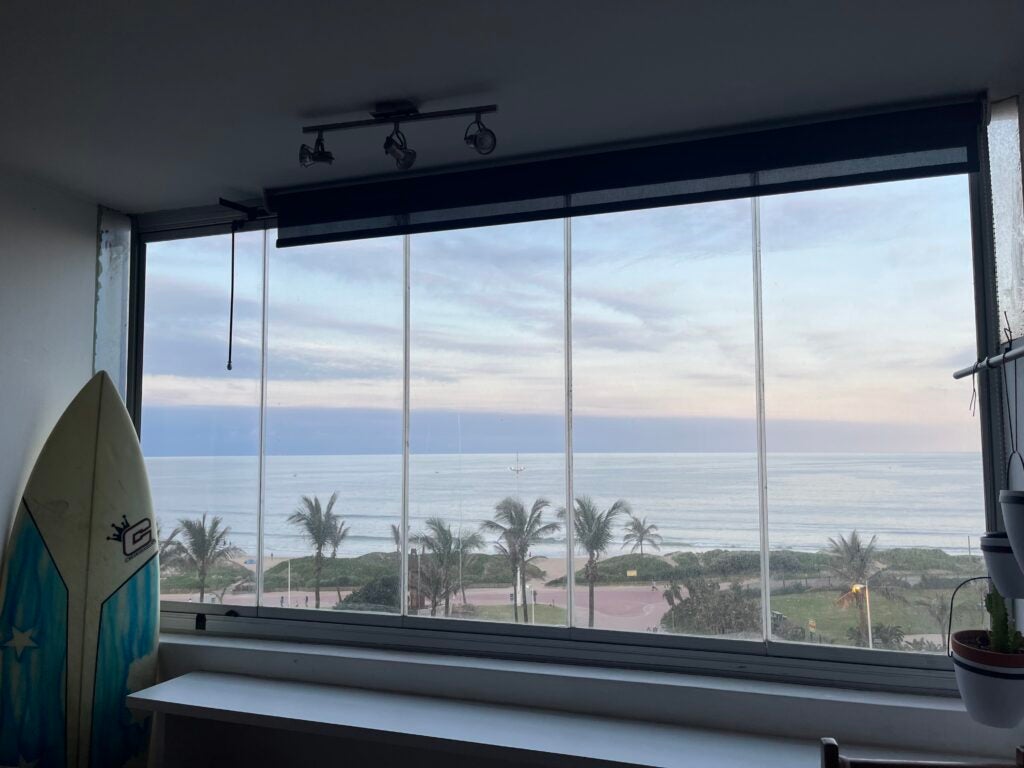
I’ve lived in Durban in several very different contexts: first with a Black family, then with a Coloured family, and later with a Zulu family in the rural North Coast (Dokodweni). I’m currently staying in a beachfront apartment with the former city manager—an incredibly generous Afrikaans man who is letting me and another student stay with him during our ISP period for a much lower fee than the usual accommodations.
During the academic phase of the program, my days were structured: I’d wake up early, get picked up, head to the office for lectures, have lunch, and usually participate in some form of off-site community engagement before returning home for dinner and evenings with my host family. I became extremely close to them—going to church together, walking the young children to the park, and cooking with the family.
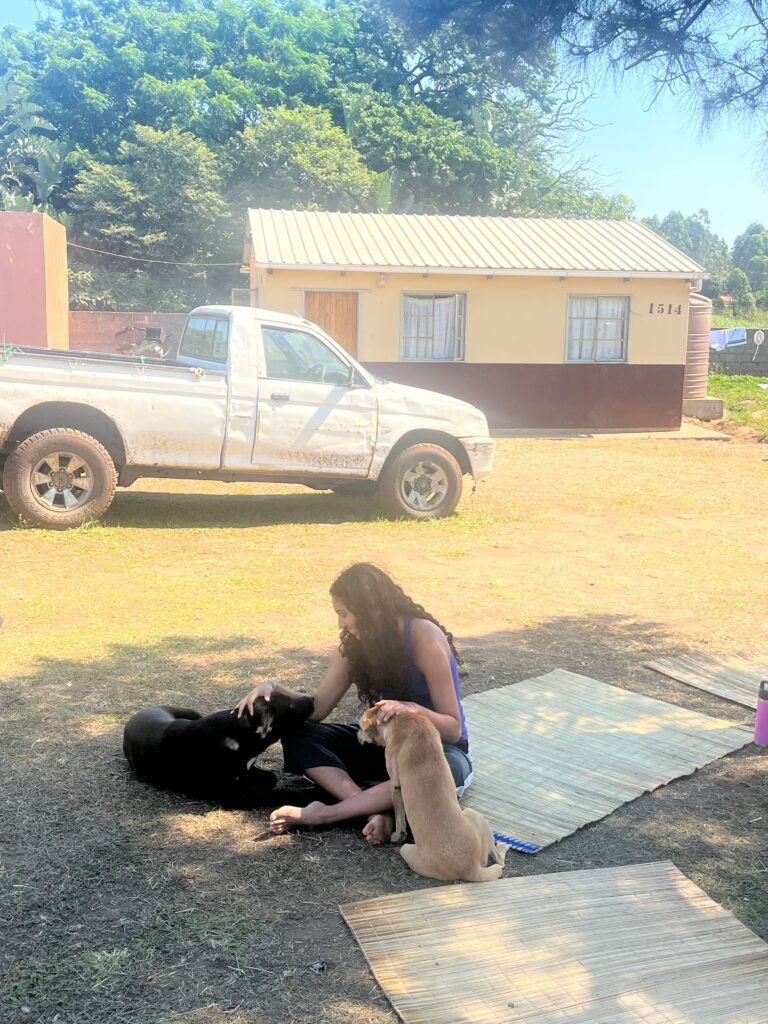
In the rural homestay, life was completely different. Without school, technology, or even a sense of time beyond the position of the sun, I lived on a sugarcane field and settled into the rhythm of rural life. I lived with the farm animals, and I even helped kill and cook a chicken for the first time. I learned so much in that short stay, especially because I was living with an Isangoma, a Zulu traditional healer. Engaging so closely with an indigenous spirituality was extraordinary.
Now, during my ISP period, my routine has shifted again. I wake up early, surf until I’m copper from the sun and pleasantly sore, and then spend the rest of the day working on my project—conducting interviews, writing, and cooking dinner before relaxing in the evening.
Q: What’s something you’ve experienced in South Africa that you will never forget – big or small?
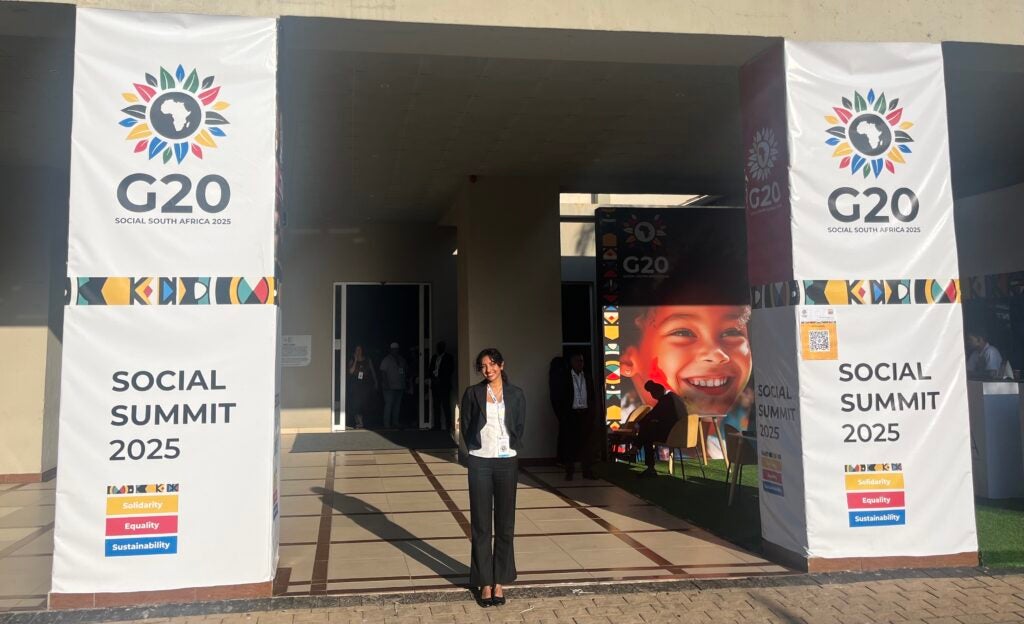
I applied to attend G20 as an independent delegate, and I was accepted. This was a huge honor, and I flew solo to Johannesburg in November to attend the summit.
I also was featured in the newspaper (The Sunday Tribune) twice in South Africa! I have the clippings, and I will cherish them forever. They first photographed me and four other women in front of a monument unveiling and then they wrote an article just about me and my research on the Indian indentured diaspora here as highlights during Indian Heritage Month.
Q: What’s your favorite South African food, spot in Durban, or cultural experience so far?
Bunny Chow! Durban has a large Indian community, whose ancestors were brought to the region during British colonial rule to work on the sugarcane fields. Their descendants are now proudly South African, and one of the most iconic dishes to emerge from this history is bunny chow. This dish involves a bread bowl of sorts, a hollowed out loaf of white bread, that’s filled with either a vegetarian or meat curry. Since black people weren’t permitted to eat in certain restaurants during apartheid, the bread bowl meant that they didn’t have to return anything to the restaurant after finishing their meal. The curry also has a distinct spice profile, as Indian cooks lacked all the ingredients they would typically use at home and used whatever spices were available to them in South Africa. This NPR article delves into more detail about the dish and its deep history– it’s absolutely incredible.
Section 4: Reflections & Takeaways
As the Office of Global Education celebrates International Education Week, we encourage our Hoyas to reflect on how study abroad has impacted them and what lessons they have brought back to the Hilltop.
Q: What personal growth have you noticed in yourself since arriving?
I feel myself becoming both more confident and more contemplative. I’m learning the quiet power of asking questions instead of rushing to provide answers. I’ve grown steadier in taking responsibility and braver in saying yes to the unknown. In many ways, I feel myself expanding—toward others, toward the world, and toward the person I’m becoming.
Q: What does international education mean to you now that you’ve studied abroad?
It means true experiential learning. There is no richer or more nuanced academic experience than stepping into places shaped by complex, living histories. Traveling to these spaces transforms learning from something you read into something you feel, witness, and carry with you.
Q: How has this experience influenced how you see your role as a global citizen?
I feel as students with the privilege of attending higher education institutions we must make the intentional choice to leave the comfortability of our lives and face the realities that the majority of the world face. There is nothing to be gained from staying in a “bubble” in such a globalized world. To be a global citizen, if you have the fortune of doing so, means you must go. Go beyond what you know, what coddles you, what you think you can handle. This is your role.
Q: Has this experience influenced what you might want to do after graduation?
I am more passionate than ever about becoming a lawyer. This experience has strengthened my commitment to move away from the stereotypical model of practicing law for the system and instead devote myself to advocacy for those who have historically been marginalized by the system.
Q: What advice would you give to other students who are considering studying abroad – especially in nontraditional or less-traveled destinations?
When choosing where to study abroad, ask yourself: When else will I have four uninterrupted months in the middle of an academic or professional year to immerse myself in an entirely new culture? You can always visit Europe on holiday—it’s just a six- to eight-hour flight away. But beyond that, beyond the West, opportunities become rarer. It took me 28 hours to reach Johannesburg because the only reasonable airfare required a layover. Many people hesitate to go farther because of language barriers. In reality, you should be learning—or at least attempting to learn—the language wherever you go. That’s part of true immersion. Don’t be afraid; be grateful that you have the chance to do this. In South Africa, there are 12 national languages, and most people speak at least three. That alone should inspire you as a student. Try new languages, travel far, learn more. You can read about Europe in any textbook, but you cannot hear the songs African children sing at their school concerts, or learn the histories of rural villages that have never been valued enough to be written down. Break new ground.
Additional Questions
To conclude our interview with Almitra, we asked rapid fire questions, ranging from things we wish we packed before going abroad and South African customs we hope to bring back from abroad!
Q: What’s one thing you packed that you’re glad you brought – or wish you had?
I wish I had brought my wetsuit! I surf every single day and when the water is cold in early mornings, I miss the comfort of using a suit. I’ve been toughing it out in my swimsuit.

Q: What about South Africa has surprised you?
How inexpensive it is in Durban. I can get a coffee for the equivalent of 1 USD. A standard lunch could be 3 USD. A nice hotel room goes for 50 USD a night.
Q: What’s a local phrase you’ve picked up and what does it mean?
Haibo! (eye-bow) It is a Zulu slang term that is essentially an expression of shock. My friends and I use it all the time. Ex. “Haibo! That minibus taxi almost crashed into us”
Q: What’s a South African custom or habit you wish people in the U.S. would adapt? Or better framed, what about the South African lifestyle is different from the U.S. and will you still be implementing it upon your return?
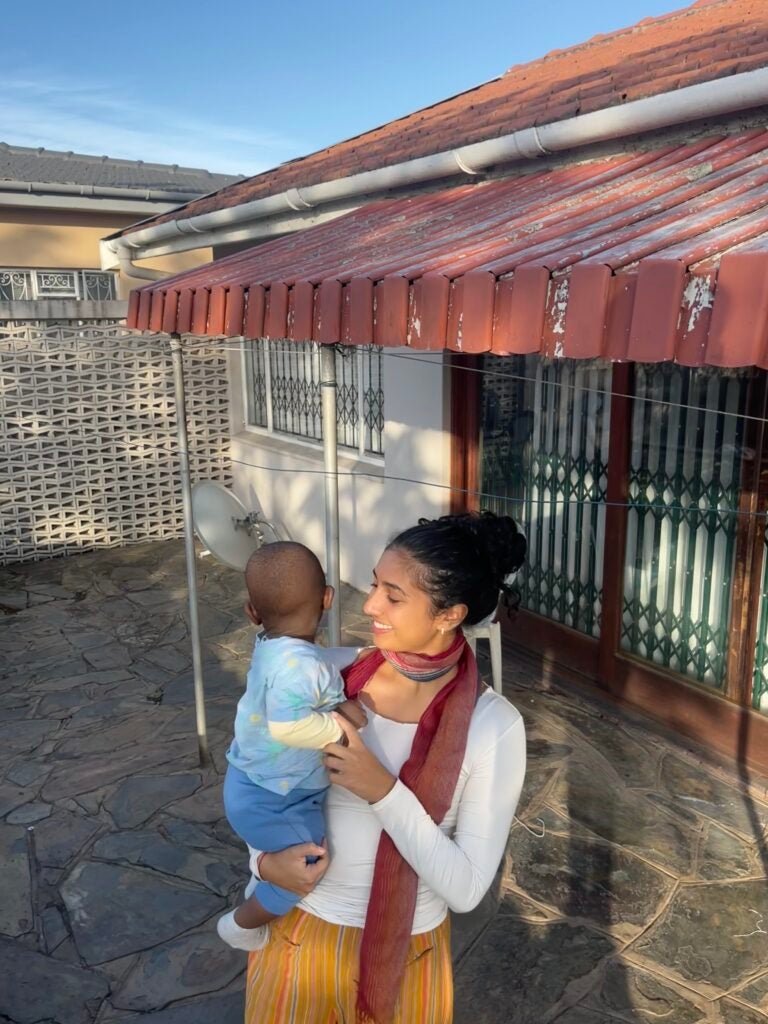
Welcoming people into their homes. I have been invited into the home of almost everyone I have met here and they are incredibly gracious. I’ve been given tea, meals, and even a bed to sleep in at times. It is incredible and I will definitely be doing my best to bring an increased generosity home to the U.S. with me.
Q: What souvenir would you definitely bring back?
A pineapple. I swear the pineapples here are the best I have ever had and we don’t have anything close to it in the U.S.
At the Office of Global Education, we are committed to providing a range of undergraduate study abroad programs that can work for any school and any major. SIT programs enable students to engage in field-based, experiential learning across the globe that extends beyond traditional classroom environments. If you’re interested in learning more about SIT programs, book a meeting with our SIT advisor, Marco Perez, on our website. With the Fall 2026 applications open for study abroad, we invite students to attend a mandatory Study Abroad 101 to learn more about their options and begin the study abroad process. These meetings are offered several times per week and are led by our team of Peer Advisors who have studied abroad in previous semesters.